Future of Cryptocurrency 2026–2035: Latest Trends
The Future of Cryptocurrency (2026–2035): Latest Updates, Deep Market Analysis & Long-Term Outlook


The future of cryptocurrency is entering a completely new phase in 2026, where digital assets are no longer just speculative investments but are becoming a fundamental part of the global financial ecosystem. Over the past decade, cryptocurrencies have evolved from a niche technological experiment into a trillion-dollar industry influenced by retail investors, institutional funds, governments, and technology giants. Coins like Bitcoin and Ethereum are now widely recognized as digital financial instruments that play a key role in shaping the future of money, payments, and investment systems.
What makes this new era different is the combination of regulation, adoption, and technological advancement happening simultaneously. Unlike earlier cycles, the 2026 crypto market is being shaped by real-world use cases, government involvement, and integration with advanced technologies like artificial intelligence and Web3 infrastructure. This makes the future of cryptocurrency more stable, structured, and globally influential than ever before.
Global Crypto Market Evolution and Current Update (2026 Insight)
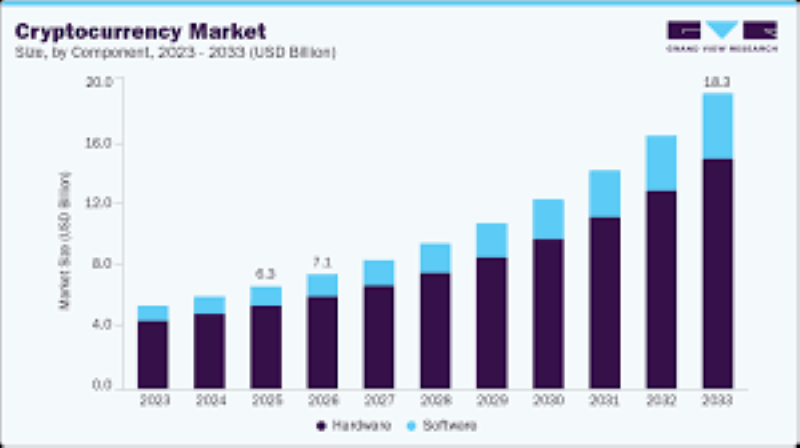
The cryptocurrency market in 2026 is significantly more mature compared to previous years. Earlier cycles were dominated by hype, rapid speculation, and sudden crashes, but now the market is gradually stabilizing due to institutional participation and regulatory clarity in several countries. Large financial institutions, hedge funds, and publicly listed companies are actively involved in crypto investments, which has added a new level of credibility and long-term confidence in the sector.
At the same time, governments are working on regulatory frameworks that aim to control risks such as money laundering, fraud, and market manipulation while still encouraging innovation. This balance between regulation and innovation is shaping a more structured digital economy. The introduction of crypto ETFs, custody services, and regulated exchanges has also made it easier for mainstream investors to enter the market safely.
Blockchain Technology Expansion Beyond Cryptocurrency
One of the most important developments shaping the future of cryptocurrency is the expansion of blockchain technology beyond financial applications. Blockchain Technology is now being widely adopted in industries such as healthcare, logistics, real estate, education, and digital identity management.
In healthcare, blockchain is being used to securely store patient records, ensuring privacy and transparency. In supply chains, it helps track goods from production to delivery, reducing fraud and improving efficiency. Governments are also exploring blockchain-based voting systems and identity verification systems to increase transparency and reduce corruption. This widespread adoption proves that blockchain is no longer limited to crypto trading but is becoming a foundational technology for the digital world.
Institutional Adoption and Financial Integration
A major driver of the crypto future is the increasing involvement of global financial institutions. Companies like BlackRock and Fidelity Investments have entered the crypto space through ETFs, digital asset funds, and custody services. This institutional participation is bringing stability, liquidity, and legitimacy to the market.
In addition, traditional banks are now offering crypto-related services such as digital asset storage, trading platforms, and blockchain-based settlement systems. Even governments are exploring partnerships with private companies to develop regulated digital financial ecosystems. This integration of traditional finance with crypto is creating a hybrid system that will likely dominate the next decade.
Rise of Central Bank Digital Currencies (CBDCs)

A major transformation in the global financial system is the rise of Central Bank Digital Currencies, commonly known as Central Bank Digital Currency. These digital currencies are being developed by many countries as a response to the growing popularity of decentralized cryptocurrencies.
Countries such as China, the European Union, and the United States are actively researching or testing their own CBDCs. These digital currencies aim to provide faster, safer, and more efficient payment systems while maintaining government control over monetary policy. However, CBDCs also raise concerns about privacy and centralized control, which creates an interesting balance between freedom and regulation in the future financial system.
Artificial Intelligence and Crypto Integration (New Trend)
One of the most exciting developments in 2026 is the integration of Artificial Intelligence with cryptocurrency and blockchain systems. AI is now being used to analyze market trends, predict price movements, and automate trading strategies with high accuracy.
Advanced AI systems are also being developed to detect fraud, prevent hacking attempts, and optimize blockchain networks for better performance. This combination of AI and crypto is expected to create a more intelligent, secure, and efficient digital economy in the coming years. It also opens new opportunities for automated financial systems where decisions are made based on real-time data analysis rather than human emotions.
Decentralized Finance (DeFi) and Future Banking System
The rise of Decentralized Finance is reshaping traditional banking systems by eliminating intermediaries and allowing direct peer-to-peer financial transactions. DeFi platforms now offer services such as lending, borrowing, staking, and yield farming without requiring traditional banks.
In the future, DeFi is expected to become even more advanced with the introduction of smart insurance contracts, automated investment portfolios, and global financial accessibility for unbanked populations. This system has the potential to redefine how financial services operate by making them more transparent, accessible, and efficient for users worldwide.
Risks, Challenges, and Market Uncertainty
Despite strong growth, the future of cryptocurrency still faces several challenges that cannot be ignored. Market volatility remains one of the biggest risks, as prices can fluctuate rapidly due to global events, investor sentiment, and regulatory announcements. Cybersecurity threats also continue to be a major concern, as hackers frequently target exchanges, wallets, and DeFi platforms.
Another challenge is regulatory uncertainty. While some countries are embracing crypto, others are imposing strict regulations or outright bans. This uneven global approach creates instability in the market. Additionally, scams and fraudulent projects continue to exist, especially in low-regulation environments, making investor education extremely important.
Real-World Adoption and Use Cases Expansion
Cryptocurrency is increasingly being used in real-world applications beyond trading and investment. It is now widely accepted in online payments, gaming ecosystems, freelancing platforms, and cross-border transactions. Many businesses are also exploring tokenization of real-world assets such as real estate, art, and commodities.
This growing adoption shows that cryptocurrency is transitioning from a purely digital asset class into a practical financial tool used in everyday life. As infrastructure improves, more industries are expected to integrate blockchain-based systems for transparency and efficiency.
Long-Term Predictions (2026–2035 Outlook)
Experts believe that the next decade will be crucial for the evolution of cryptocurrency. Bitcoin may become a global store of value similar to digital gold, while Ethereum and other smart contract platforms may dominate decentralized applications. Governments are likely to introduce clearer regulations that support innovation while protecting investors.
It is also expected that tokenization of real-world assets will become mainstream, and blockchain technology will be integrated into most digital systems globally. The number of crypto users worldwide could reach billions, making it one of the largest financial networks in human history.
Conclusion: A Transforming Global Financial System
The future of cryptocurrency represents a major shift in the global financial landscape. It is no longer just a trend or speculative market but a developing financial ecosystem powered by blockchain, AI, institutional investment, and government involvement. While challenges still exist, the overall direction of the industry is toward mass adoption, increased regulation, and technological innovation.
For investors, developers, and businesses, understanding these changes is essential for staying ahead in the rapidly evolving digital economy.
FAQs
Q1: What is the future of cryptocurrency?
Crypto will grow fast. It will become part of global finance.
Q2: Is crypto safe for investment?
It is risky. But it also gives high returns.
Q3: Will crypto replace banks?
No. But it will work with banks.
Q4: What is blockchain?
It is a secure digital system that stores data.
Q5: What is the biggest risk in crypto?
Price volatility and scams are the biggest risks.